
Preparing shared areas for a rat inspection
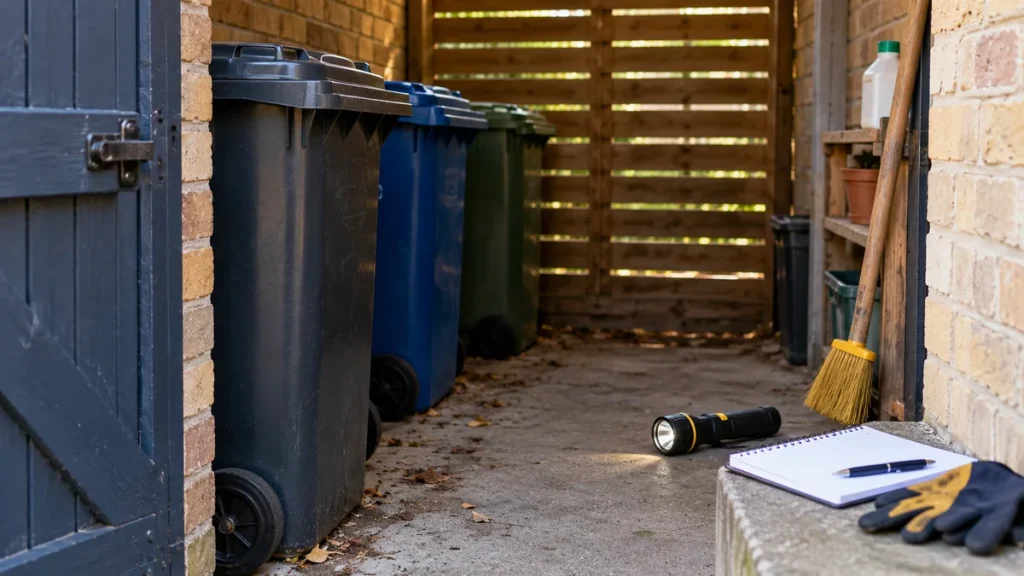
A bin store, service yard or communal passage can hold the clearest signs of an outdoor rat problem, yet the person reporting it may have no authority to unlock or alter that space. Preparation therefore begins with access and a reliable account of what has been seen. The aim is to let the specialist inspect the relevant areas safely while keeping waste, people and pets managed. Do not place products, open drains or disturb suspected burrows before the visit.
Identify who controls each space
List the places where signs have been reported: bin store, rear yard, garden boundary, cellar entrance or shared service route. For each, note who has the key and who may authorise an inspection. A tenant may be able to show signs from a flat but not open a locked riser or agree building repairs. Contact the managing agent, landlord or site manager early so access can be arranged for the appointment. If access is uncertain, tell the pest team before they travel.
Keep a single contact chain where possible. Multiple residents sending different reports can create confusion about dates and locations. A named contact can gather photographs and arrange the key holder without deciding in advance where the animals came from. Avoid attributing the issue to a neighbour. Factual evidence and practical access are the useful contributions at this stage.
Build a concise evidence map
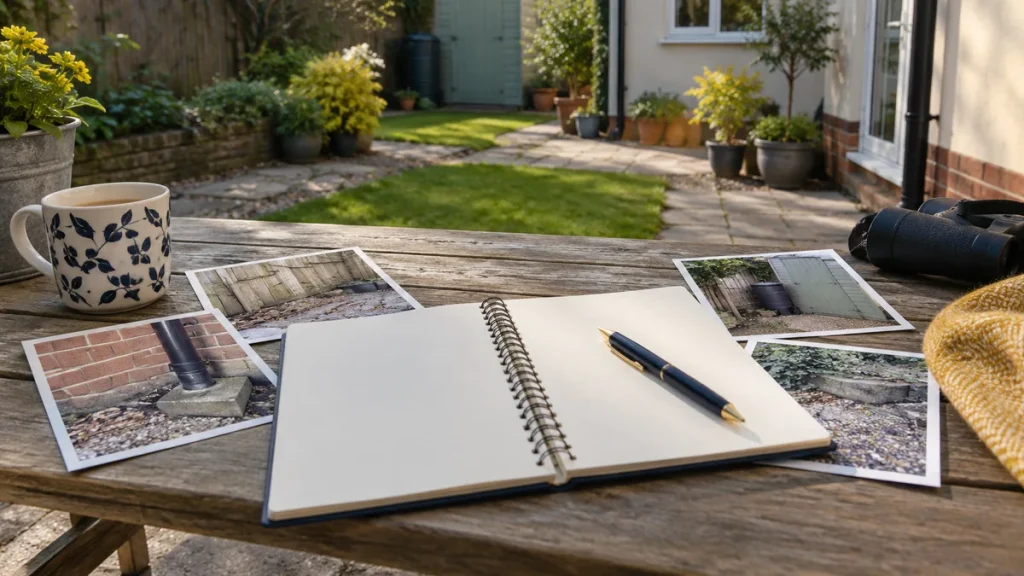
Mark sightings, suspected burrows, droppings and damaged waste containers on a simple plan. Add dates and note whether each sign is direct observation or something another person reported. Photograph the wider area and a safe close view. Do not reach under bins or decking to get an image. If a hole is near unstable paving or a damaged wall, keep clear and report the hazard to the responsible property professional.
Note collection days, recent missed pickups and whether bags have been left outside closed bins. These details can help distinguish an ongoing waste problem from a one-off spill. Clean exposed food safely after recording it; the area should not be left hazardous merely to preserve evidence. If signs appear indoors as well, describe them on the same timeline but keep the locations distinct.
Separate the reported sign from its interpretation
Write “hole beside the wall” rather than “rat nest” unless a qualified assessment has established what it is. A resident may describe a noise from a cupboard while another reports an animal near the bins; these observations may be connected, but they may also be separate. Keeping the original description makes it easier for the inspector to test possible routes. If a photograph was taken weeks earlier, keep its original date. Do not present an old image as evidence of today's activity. A clear timeline can prevent the wrong area being prioritised.
Make the area usable for inspection
Access and lighting
Check that the route to the site is open, that gates can be unlocked and that the key holder will be available. Do not bypass locks or enter a restricted space without permission. If lighting is poor, tell the specialist rather than wiring a temporary light yourself. Identify any trip hazards, stored materials or vehicles that limit access. The visitor may need to adjust the scope if a space cannot be reached safely.
Waste and storage
Keep ordinary waste inside containers and lids closed. Do not move bins far from their normal positions just before inspection; their arrangement may help explain repeated spillage or access. If a bin is broken, photograph it and arrange repair through the responsible party. Shift only light, safe clutter that blocks walking space, and record any change. Leave suspected burrows or tracks undisturbed.
People and animals
Tell the team if the area is used by children, pets, delivery staff or the public. Ask what precautions would apply if treatment is proposed. Keep people away from a specific opening or unstable patch without making claims about its cause. Do not scatter bait or install improvised devices in a shared area. A method must account for who can enter and how equipment will be protected.
Questions to settle before work is agreed
Ask what evidence supports a rat identification and which places were inspected. Were any routes inaccessible? What treatment, monitoring or proofing is proposed, and what is the role of waste management? Who will repair a damaged door, drain or paving? Confirm the quotation and whether follow-up visits are included. The site's rat control service describes checking evidence and routes before selecting measures. That sequence helps avoid treating a bin store while leaving an obvious access issue unresolved.
If an opening may be connected to drainage, a qualified drainage investigation may be needed. If wiring or structure is damaged, involve the appropriate trade. The pest controller can explain pest-related findings but should not be expected to undertake unrelated repairs without an agreed scope. Write down who owns each next step and its expected date, so the follow-up can compare new signs with completed work.
The appointed contact should also ask how findings will be shared with residents. A short factual update can explain which areas were inspected, what action is planned and whom to notify about new signs. Avoid circulating photographs that identify a private flat or resident when they are not needed for the work. Clear updates help everyone follow the agreed inspection plan.
Coordinate residents without spreading assumptions
Ask residents to report dates, locations and photographs through the agreed contact. A message such as “fresh droppings beside the rear bin on Tuesday” is useful; a claim that a particular flat caused the problem is not. Do not share another person's private information to pursue the inspection. If residents notice indoor signs, advise them to report those through normal management channels and avoid moving suspect items between units.
A shared space may connect to several parts of the building. The inspector may need to compare outdoor signs with accessible indoor evidence, or recommend a separate visit when permission is available. If the evidence suggests smaller indoor rodents, the mice control service may be relevant. Let identification follow the findings rather than choosing a label from the size of one hole.
After the appointment
Keep the written plan accessible to the people responsible for bins and repairs. Ask what should be monitored, what equipment must remain untouched and when to report new signs. Record dates of waste collection, cleaning and completed repairs alongside sightings or damage. A clean bin store for one afternoon is not proof that the route has been resolved. Equally, an old opening may remain visible after activity has stopped; follow the agreed evidence-based review.
For the stated Wembley area, use the site's contact page to discuss the shared setting, full postcode and access arrangements. Having a key holder, an evidence map and a clear repair contact ready can make the first visit more productive without asking residents to investigate unsafe spaces themselves.