
WEMBLEY / ROOF-SPACE ASSESSMENT
Squirrel Control
Wembley
Understand the activity
above the ceiling.
Roof-space noise needs identification, a safe inspection and a sensible control sequence. Discuss squirrel activity, access and proofing priorities for your Wembley property without guessing from sound alone.
WHAT THE FIRST CONVERSATION RESOLVES
The roof edge.
The access.
The evidence.
Describe when the noise happens, which part of the property it seems to affect and whether anyone has seen an animal using an opening. Give the full HA0 or HA9 postcode, the property type and details of loft access. Mention recent roof works, solar equipment, shared roof spaces and any pest products or traps already used.
A description helps define the visit, but it cannot settle species or extent. If the evidence instead suggests rats using a lower service route, the inspection may need to follow the checks described in rat control. Smaller droppings or cupboard activity may require a mouse assessment. The important first step is to investigate the reported activity rather than committing to a squirrel method before the facts are available.
ROOF-JUNCTION INSPECTION
Follow the opening.
Do not assume the occupant.
A roof-junction guide, not a house blueprint or a statement that every opening is active.
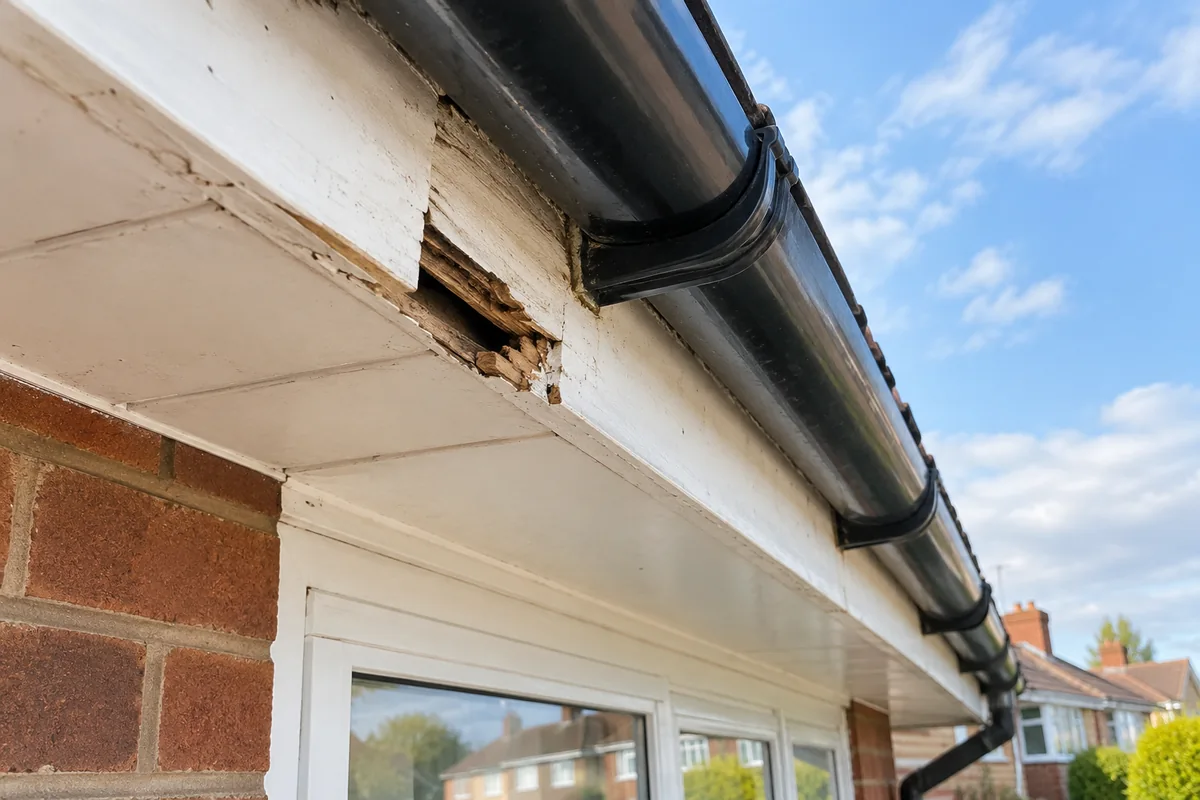
The inspection considers the relationship between a possible opening and the signs found inside. Gnawing around a soffit, displaced material and repeated sightings can support an access hypothesis, but each finding needs context. Safe external observation may identify areas requiring closer examination by a suitably equipped person. The visit does not assume that every roof surface can be reached.
| Clue | What can be checked | What remains uncertain |
|---|---|---|
| Repeated roof-edge sightings | Where the animal approaches and leaves the building. | A sighting does not establish every occupied space. |
| Gnawed soffit or fascia | Damage, opening and accessible signs nearby. | Damage may be historic or have another cause. |
| Disturbed insulation | Location, associated droppings and fresh disturbance. | Insulation movement alone does not identify an animal. |
| Noise above a ceiling | Timing, position and other supporting evidence. | Sound can travel away from its source. |
SPECIES AND SCOPE
Identification changes
the control plan.
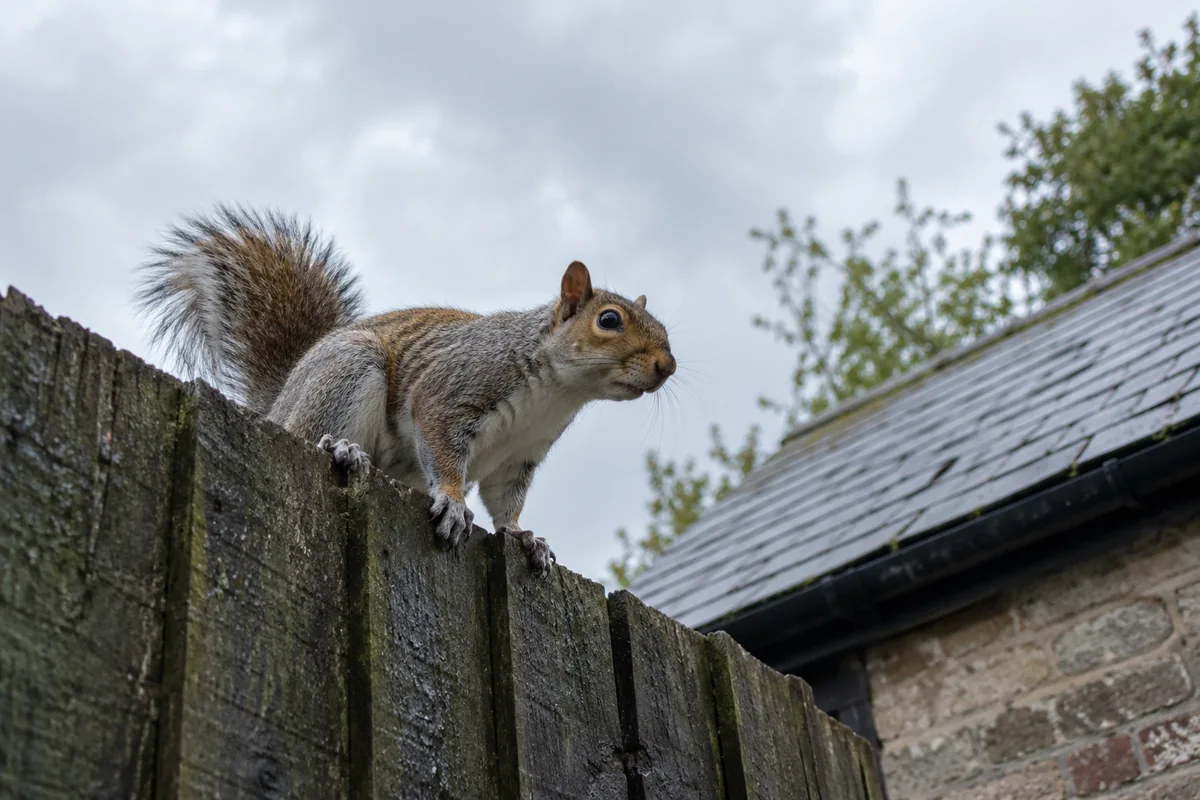
The specialist looks for a combination of identifiable evidence rather than one dramatic sign. Accessible droppings, gnawing, nesting material, sightings and the character of an opening can help establish the likely animal and affected area. Where the evidence is inconclusive, further observation or monitoring may be more appropriate than immediate treatment.
Species and welfare considerations affect what can be done. Suitable control must follow the applicable requirements; the customer should not handle, move or release an animal based on a general description. Discuss who will attend to any device and what happens if an animal is found. A plan should make these responsibilities clear before equipment is placed.
ACCESS BEFORE ACTION
A useful inspection
needs a safe working position.
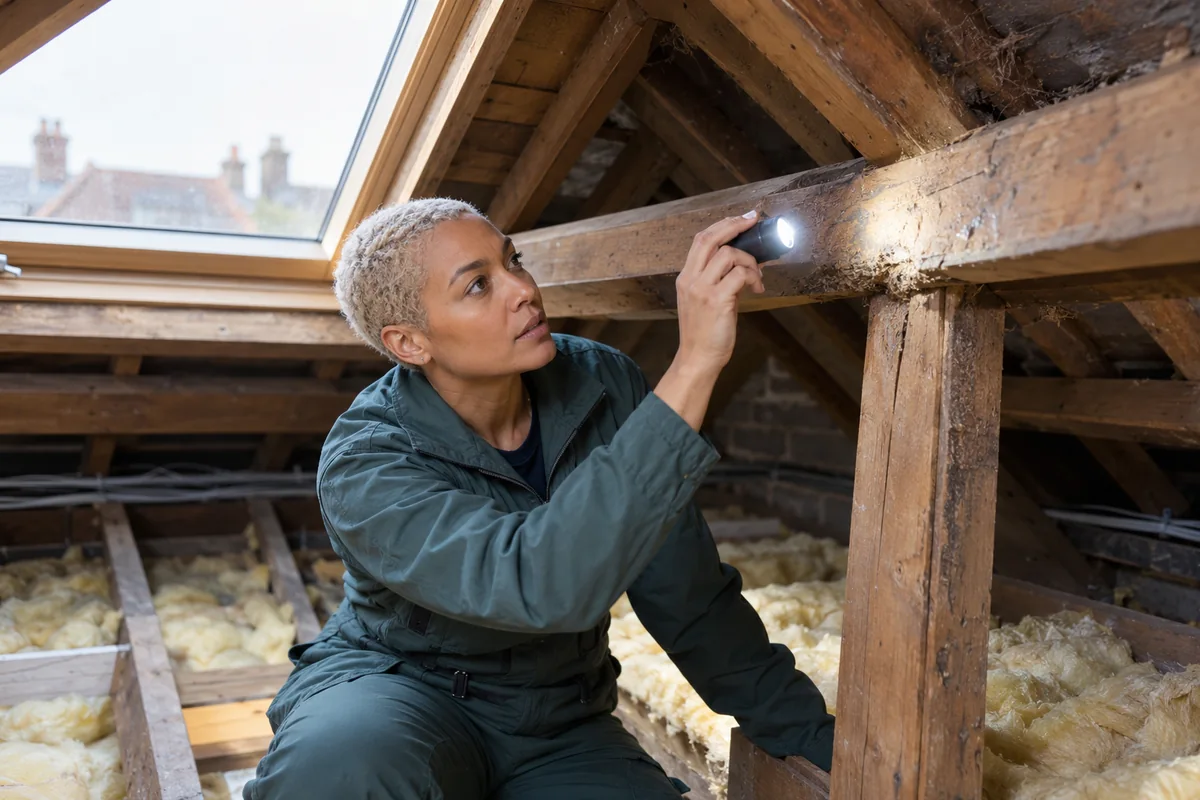
Tell us whether the loft has a fixed hatch, lighting and safe boarding, and whether stored belongings obstruct the route. Do not enter an unsafe void to take photographs. An inspection from an accessible position may still leave areas unseen; these limits should be recorded and explained. Specialist access equipment or another contractor may be needed before higher or concealed openings can be examined.
Where safe access is available, a torch, viewing aid or appropriate monitoring equipment may help inspect the relevant timbers and junctions. Their use depends on the site and is not a promise that a particular device is included. The specialist should explain what the equipment can show and where further investigation would add value. Access restrictions can affect both the quotation and the proposed follow-up.
Separate the three access decisions
Noise, sightings, roof workSpecialist can inspect
Safe, accessible evidenceSeparate agreement may be needed
Height, repairs, opened voids
Each part has a different scope. The inspection does not imply permission to dismantle roofing or enter an unsafe area.

SUITABLE CONTROL
Agree the sequence
before anything is closed.
Once identification and access have been assessed, the specialist can discuss appropriate control options and checking arrangements. Trapping or other lawful measures may be suitable in a particular situation, but the choice depends on species, property conditions and the evidence. The explanation should include the intended locations, who checks equipment and what the customer must leave undisturbed.
Proofing is part of the wider response, but its timing matters. Closing an opening without understanding the activity can make inspection or control more difficult. The proposed sequence should explain how the outcome is assessed before suitable repairs are completed. Damage to roofing, electrical installations or other building elements may need a separate qualified trade rather than a pest-control adjustment.
| Part of the plan | Question to ask | Practical limitation |
|---|---|---|
| Identification | What evidence supports the species assessment? | Unseen areas may need additional observation. |
| Control measures | Why is the proposed method suitable here? | The choice follows species and site requirements. |
| Checking arrangements | Who checks equipment and attends if activity is found? | Do not assume the customer should handle animals. |
| Roof proofing | When can each opening be repaired or protected? | Height and building repairs may need another contractor. |
Keep children and pets away from equipment and the affected access point. Do not reposition a trap, investigate a roof opening with a ladder or attempt to retrieve an animal yourself. Follow the site-specific instructions given for the chosen method, and report any disturbance or damage to equipment rather than attempting a repair.
CUSTOMER PREPARATION
Make the information
easy to follow.
Keep a short record of the timing and position of noise, together with photographs taken from safe locations. Point out recent roof work, neighbouring construction or a change in access to shared spaces. These observations help the specialist compare the report with what is found on the day.
Clear the agreed hatch approach and explain any restrictions on moving stored items. Do not remove nesting material or clean extensive signs before advice. Ask whether belongings need protecting and whether any room or loft area must remain unused during the work. Preparation should be specific to the proposed visit rather than a general instruction to empty the entire roof space.
What shapes the quotation
The extent of accessible activity, roof height, shared-space permissions, the method and checking arrangements all affect scope. Proofing materials, building repairs, specialist access or clearance may be separate. Ask what is included and what would change the quotation. The Wembley contact section provides the confirmed phone number for discussing these details.
CHECKING THE OUTCOME
Review the signs.
Then secure the route.
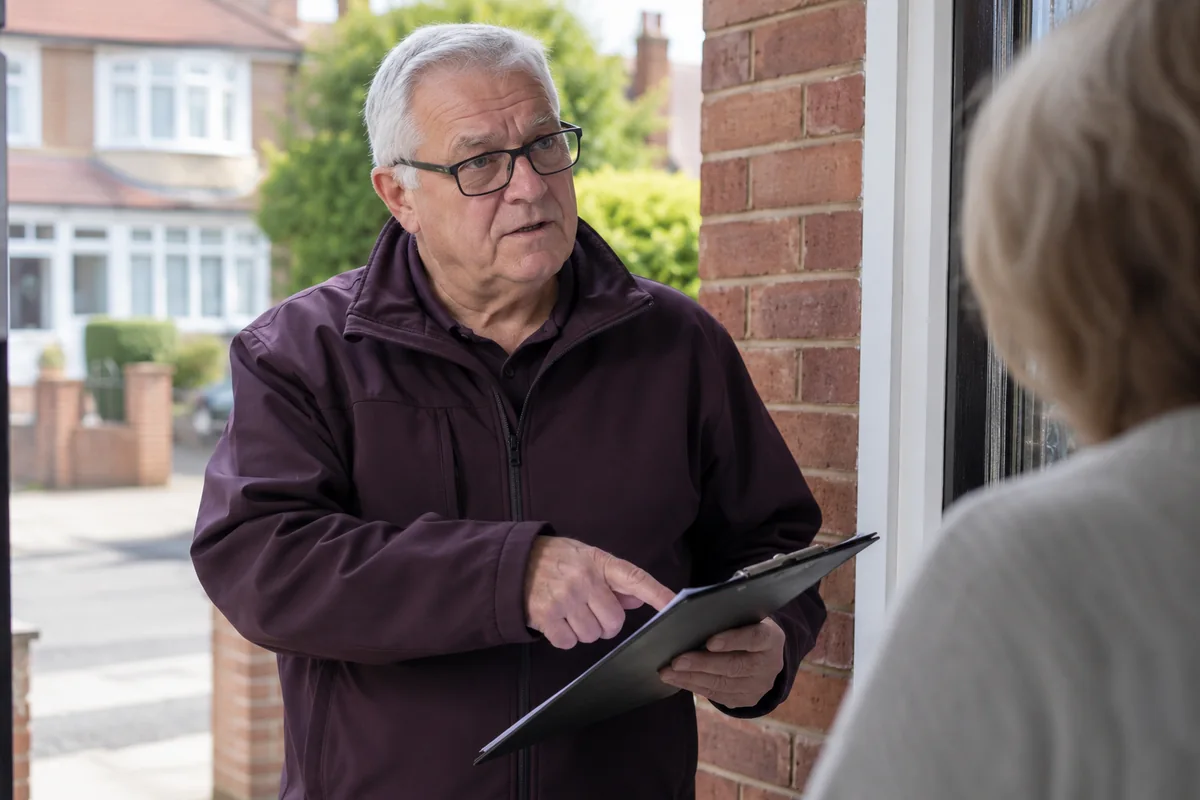
The review should relate to the evidence and work carried out: fresh noise, renewed gnawing, sightings around the original opening and any monitoring findings. Keep a record of changes rather than relying on one quiet period. Ask when the agreed plan calls for another check and what would justify extending the inspection.
Suitable proofing and repairs can reduce the opportunity for repeat entry, but they need to account for roof ventilation, weather protection and the building’s condition. Do not cover a functional vent indiscriminately. The specialist should explain the prevention priorities and which work belongs with a roofer or another trade. The broader pest control Wembley approach connects evidence, treatment and prevention without treating them as interchangeable tasks.
| After the visit | What to record | Why it helps |
|---|---|---|
| Fresh roof-space noise | Time, duration and the part of the ceiling affected. | Allows comparison with the original report. |
| New gnawing or material | Photograph the location without entering an unsafe area. | Helps distinguish new disturbance from old damage. |
| A repaired opening | Which repair was completed and when. | Links changes in activity with the proofing sequence. |
| Signs in a neighbouring void | Location and the relevant access permission. | May indicate that a connected space needs investigation. |
If stored textiles also show damage unrelated to roof entry, mention it separately rather than assuming squirrels explain every finding. Moth control involves a different material-focused inspection; a combined enquiry still needs each concern to be identified.
TIME-SENSITIVE ROOF-SPACE CONCERNS
An animal trapped in an occupied part of the property, active damage or an immediate access concern merits a prompt call. Explain the situation, postcode and any safe way to keep people and pets away. Do not climb, handle an animal or open a concealed area to investigate. The next available appointment and the appropriate response are discussed by phone; attendance is not guaranteed for a particular hour.
Questions about squirrel control
Does daylight noise confirm squirrels?
Daytime running or scratching is a useful clue, but sound can travel through a roof and is not a species identification. Accessible droppings, gnawing, sightings and entry routes help establish what is happening.
Can I seal the roof opening immediately?
Get advice before closing a suspected active opening. The control and proofing sequence must account for animals that may still be inside and for access needed to check the outcome.
Is the loft safe for me to enter?
Do not enter an unboarded, poorly lit or otherwise unsafe roof space to collect evidence. Describe the access and point out signs from a safe position. The specialist will discuss what can be inspected safely.
Will the inspection include repairing the roof?
Inspection, animal control and building repair are different tasks. Ask which accessible proofing work is included, and whether a roofer or another contractor is needed for damaged tiles, soffits or high-level openings.
What if the roof space is shared with another property?
Tell us about party-wall gaps, communal lofts and access restrictions. Permission or coordination with neighbours, a landlord or a managing agent may be needed to investigate a connected roof space.
Can you remove an animal I have already caught?
Explain the situation by phone without handling the animal or moving equipment. The appropriate response depends on species, welfare and applicable requirements; do not assume release or disposal arrangements are interchangeable.
What should I watch for after the work?
Keep a dated record of fresh noise, new damage or sightings near the original route. Follow the agreed inspection and proofing sequence, and ask when findings justify another visit rather than setting your own deadline.