
WEMBLEY / HA0 + HA9
Moth Control Wembley
Moth control starts with the material being affected, not simply the moth seen in the room. An inspection links insects, larvae, webbing and textile damage to a likely source. For a Wembley home or business, discuss the affected items, where signs appear and what needs protecting before agreeing suitable treatment.
Start with the affected material
When you call, describe whether the concern is around clothing, carpets, upholstery or stored food. Tell us the postcode, property use and rooms involved. Photographs of the insect and damage can help prepare the inspection, but a photograph of a hole does not establish its cause. Explain when the damage was first noticed and whether anything has been moved, cleaned or treated since.
Keep a small sample or clear photograph if it can be collected safely. Avoid transferring suspect garments into unaffected wardrobes. A moth found near food may need a different source investigation from damage to wool. The enquiry should define what can be inspected and which materials are especially delicate, valuable or difficult to move.
| Finding | What needs checking | Why it changes the plan |
|---|---|---|
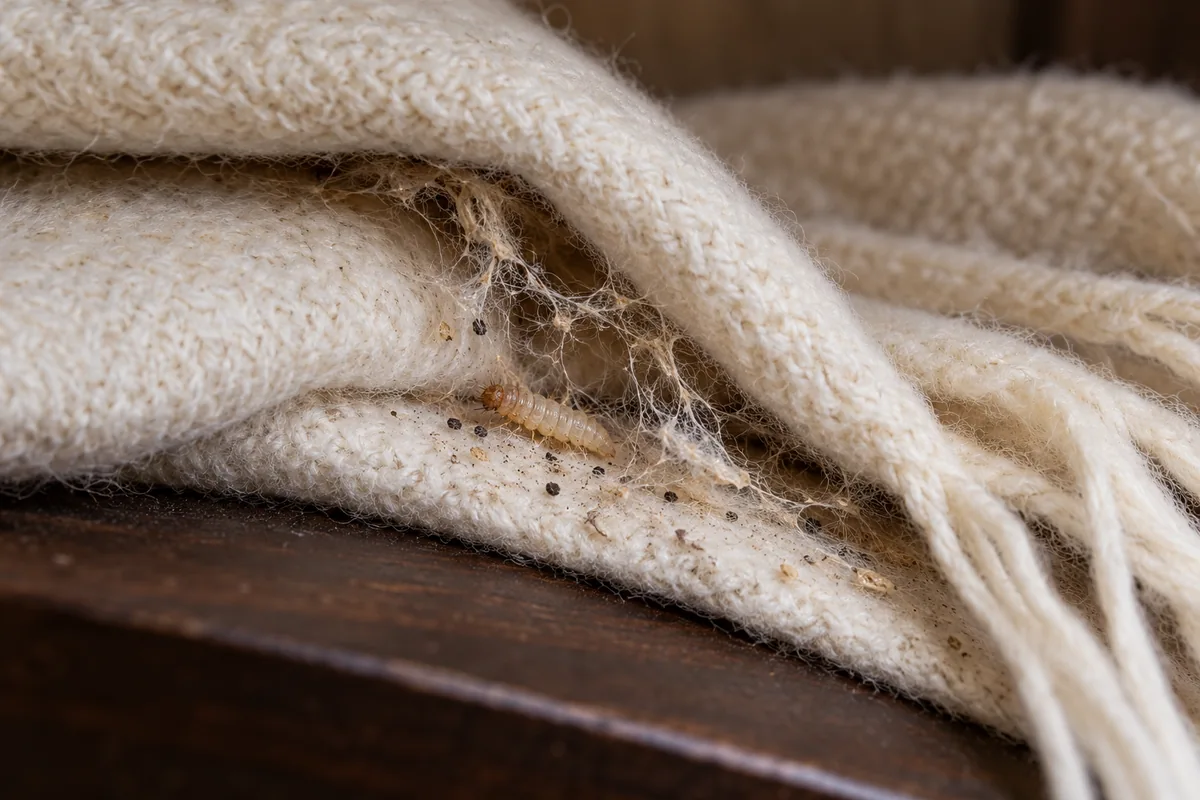
| Holes in wool | Larvae, webbing and concealed folds | Damage alone does not identify the insect. |
| Adult moth near clothing | Species and nearby susceptible material | The visible adult may not locate the larval source. |
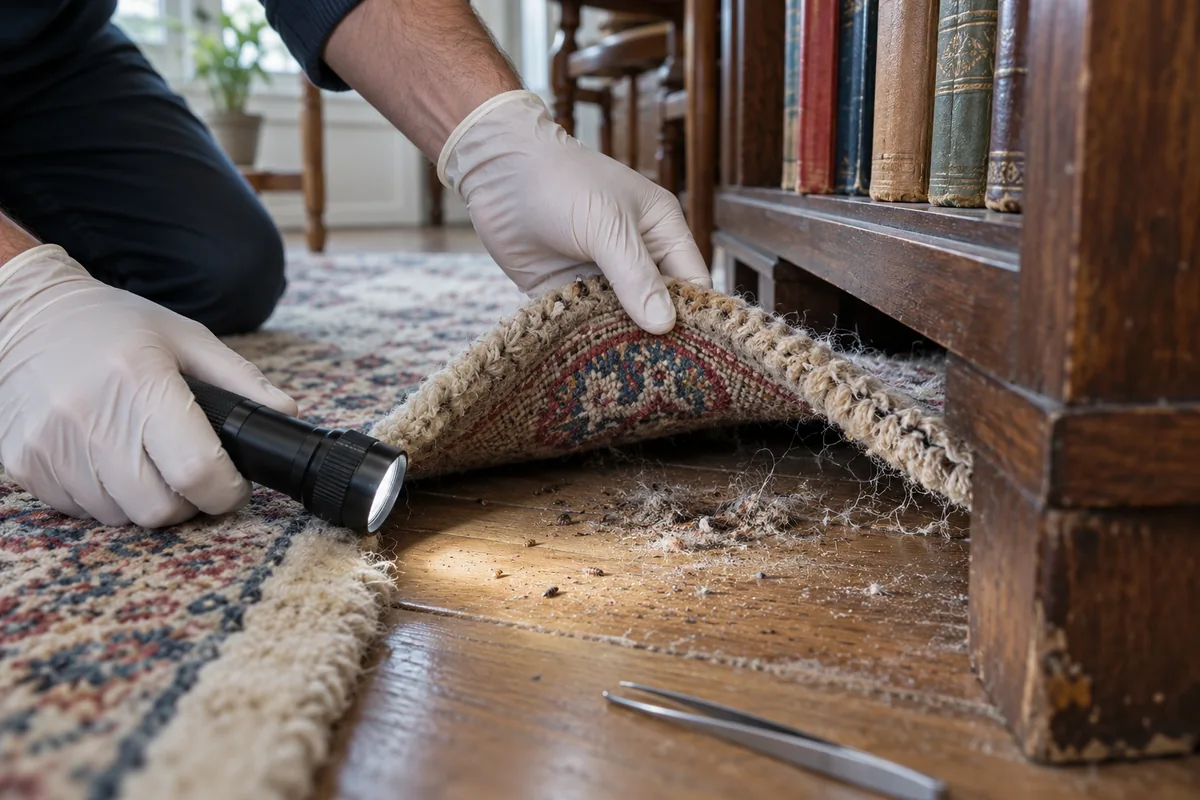
| Debris beneath furniture | Natural fibres and undisturbed edges | A concealed source may sit away from the first sighting. |
| Food-area sightings | Stored-food context and specimens | Textile and food-related investigations differ. |
Compare susceptible material with supporting signs; these clues guide inspection rather than diagnose the pest.
Inspect the quiet edges
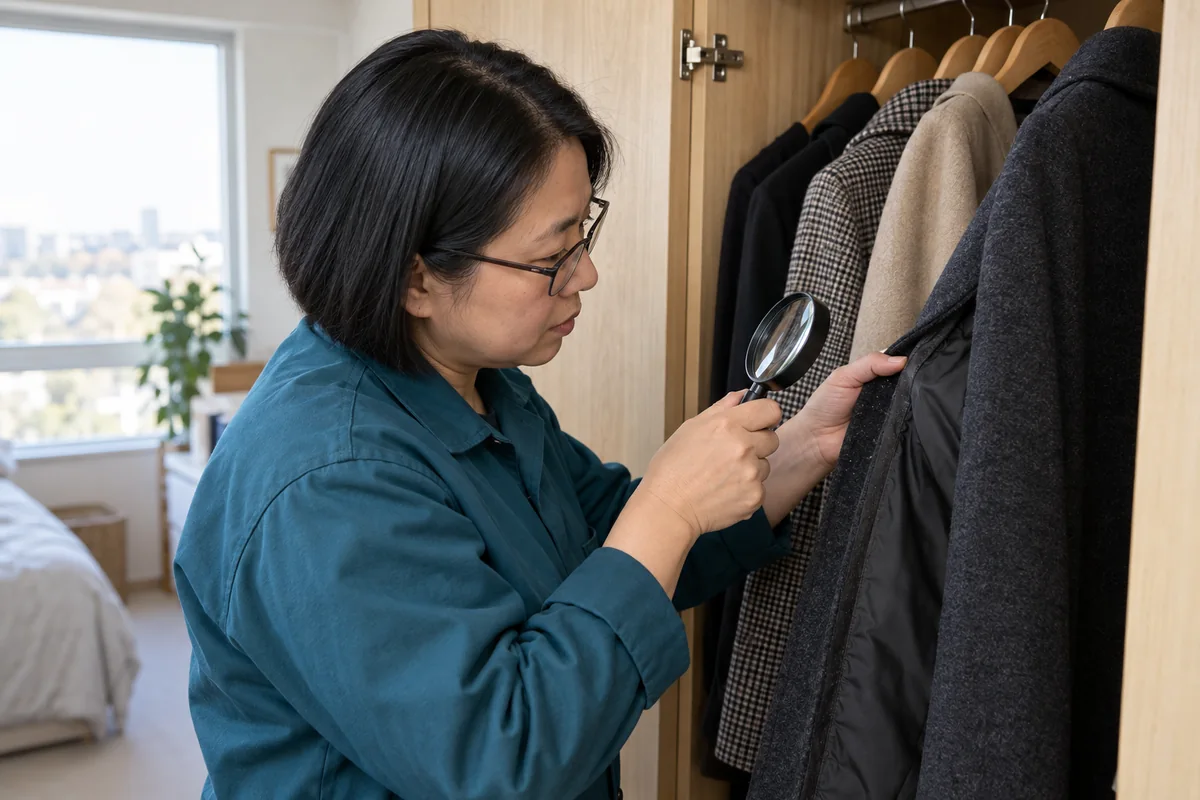
The specialist examines accessible garment folds, seams, carpet margins and sheltered storage areas for evidence associated with textile pests. The reverse of a rug or the edge beneath furniture may be more informative than its exposed centre. Larvae, webbing and other signs are considered together, with care taken to distinguish new activity from old damage or ordinary wear.
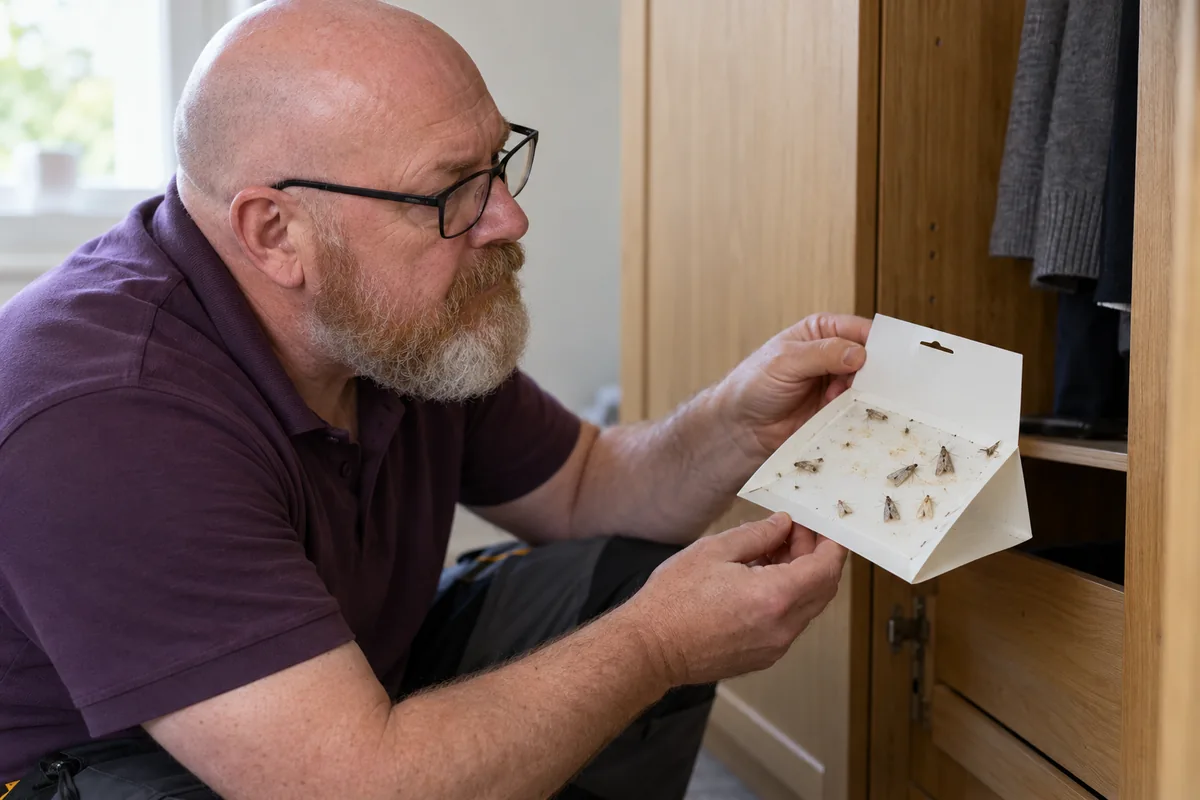
Inspection may include a torch, hand lens, sample container or suitable monitoring device. These are possible inspection aids, not a promise of a particular equipment package. Heavy furniture, fixed floor coverings and sealed voids have access limits. Agree before the visit what can be moved safely and whether another person must arrange access. Carpet beetle inspection may be relevant where cast skins or different larvae are present.
Find the source before choosing a response
The assessment follows the distribution of affected natural fibres and concealed debris. A single damaged jumper may have a different scope from activity across a fitted wool carpet or several storage areas. Nearby textiles are checked selectively so the plan is based on findings rather than assuming every room needs the same treatment. Tell the specialist about stored blankets, spare rugs and items that have been left undisturbed.
Where textile-moth activity is supported by the evidence, source cleaning, monitoring and suitable targeted measures may be considered. The method depends on the identified pest, materials, access and occupancy. Treatment of a room does not automatically make every garment safe to move or clean in any way. The quotation should explain the area covered, preparation, precautions and whether a review is included.
Prepare without spreading the problem
Preparation is agreed after the affected material and proposed method are understood. Clear safe access to the relevant wardrobe, floor edge or furniture base. Keep suspect fabrics together in their existing area until advice is given. Label your own notes with the location of damage so separate items do not lose their inspection context. Mention sensitive fabrics, antiques, children, pets and any products already applied.
Do not apply heat or aggressive cleaning simply because an item has holes. Follow its care requirements and the specialist’s handling instructions. A delicate textile may need advice from an appropriate textile-care professional. Where different insects are being reported around beds or bites, explain that separately: bed bug treatment addresses different evidence and preparation needs.
What suitable treatment may involve
The specialist explains what has been identified, the source areas that are accessible and the purpose of each proposed action. Suitable targeted treatment may focus on affected edges or harbourages, while cleaning removes accessible material that can sustain activity. Any product or method must be appropriate to the pest, surface and people using the space. Do not assume that a garment and a carpet can be treated in the same way.
Before work, confirm which areas need to be unoccupied, which belongings need protection and when normal access can resume. Keep people and pets away from any treated areas or devices as instructed. Written preparation and aftercare take priority over general advice on this page. Ask whether monitoring is for identification, activity review or part of the agreed treatment scope.
An abstract wardrobe inspection guide highlights seams, storage folds and lower edges, not infestation likelihood.
| Area | Useful preparation | Avoid before advice |
|---|---|---|
| Wardrobe | Keep affected items identifiable; clear access | Mixing suspect clothing with unaffected storage. |
| Wool carpet | Clear safe access to affected margins | Lifting fixed carpet or moving heavy furniture alone. |
| Delicate upholstery | Explain material and care restrictions | Applying heat or products without suitability advice. |
| Stored fabrics | Record the original box or shelf location | Discarding all evidence before inspection. |
Review the evidence that matters
After the visit, keep a dated note of fresh damage, larvae, webbing and sightings, with the original location recorded. Existing holes will remain visible after control work, so progress cannot be judged by their continued presence. Monitoring findings need interpretation alongside material inspection; catching an adult alone does not describe the whole extent of concealed larval activity.
A further visit may be appropriate if fresh evidence continues, an inaccessible source becomes available or the original scope needs revision. Agree how and when to report findings. The review may lead to additional source work, revised handling advice or a different inspection area, rather than automatically repeating the same action. If insects are reported around damp storage instead, silverfish control may require a conditions-led assessment.
At the end of inspection, ask the specialist to distinguish confirmed findings from areas that could not be checked. A useful record names the affected material and its location, describes the evidence and identifies any preparation still required. If several people manage the premises, agree who will arrange textile handling, access and review reporting. That prevents an item being moved or cleaned by someone who has not seen the instructions. Keep the original photographs with the plan so a later discussion can compare like with like.
Protect textiles after the inspection
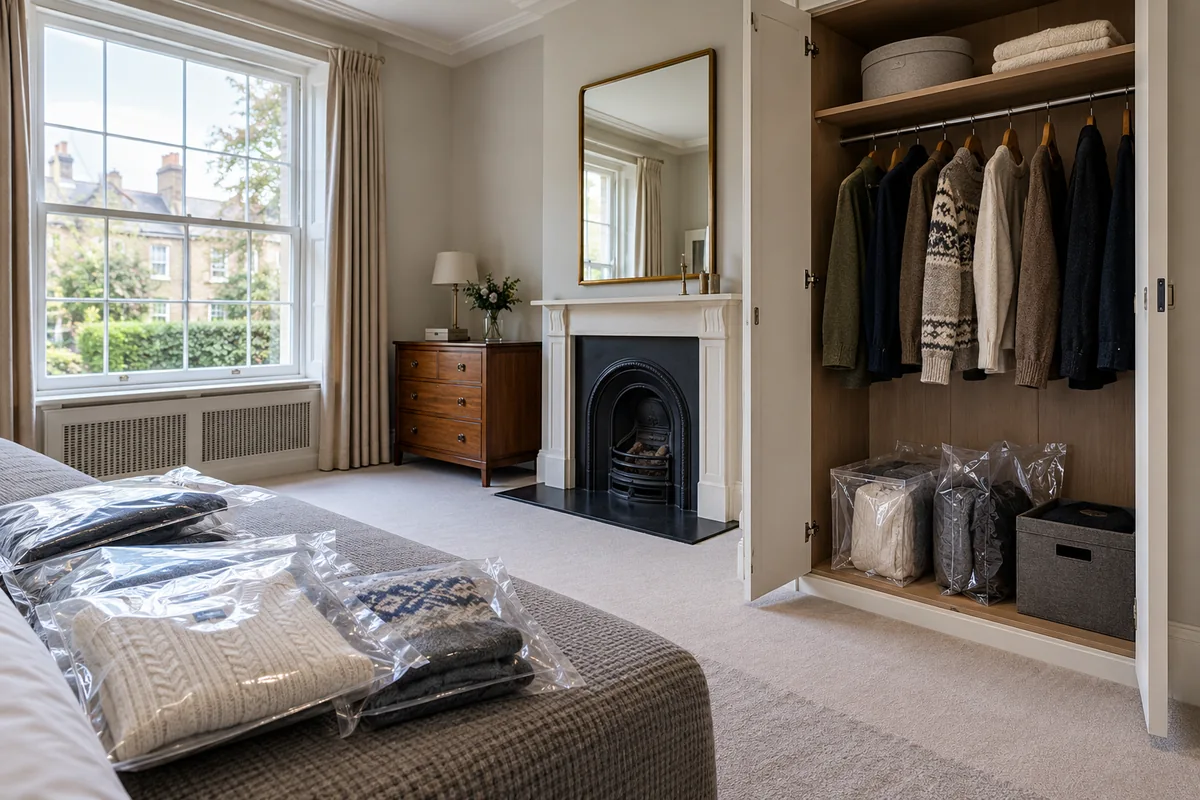
Longer-term prevention focuses on accessible debris, undisturbed storage and how vulnerable natural fibres are kept. Discuss a practical cleaning and inspection routine suited to the material rather than a blanket instruction to empty the entire property. Before returning items to storage, follow the agreed handling advice and keep the location of any renewed damage identifiable.
Prices depend on the material, spread of evidence, access and treatment or monitoring proposed. No fixed Wembley price is published here. Ask what the quotation includes and whether additional textile care, moving furniture or return visits are separate. For the wider inspection approach, see Wembley pest control; use the contact number to discuss a time-sensitive concern involving valuable or extensive textiles.
| Decision | What to agree | Possible limitation |
|---|---|---|
| Source work | Affected materials and accessible areas | Concealed sources may need later access. |
| Targeted treatment | Method, preparation and precautions | Not every textile accepts the same approach. |
| Monitoring | Purpose and reporting arrangements | Adult catches need interpretation. |
| Follow-up | Included checks and further-work quotation | Fresh evidence can change the assessed scope. |
Questions about moth control
Does one moth mean my clothing is infested?
No. Identification and supporting signs matter. An adult may have arrived from elsewhere, while concealed larval activity may be present without obvious flying moths. Keep the location and a clear specimen photograph for the assessment.
Can you tell whether a hole is new?
A visit can assess the pattern and surrounding evidence, but an isolated hole may not be reliably dated. Your notes and photographs taken over time can help distinguish fresh changes from damage that was already present.
Should I empty every wardrobe before you arrive?
Not unless the agreed preparation requires it. Moving everything can obscure the source and transfer suspect items. Explain which storage is affected and make safe access available so the specialist can guide the next step.
Are clothes moths and carpet beetles treated identically?
They can affect similar fibres, but identification, source behaviour and evidence differ. A plan should follow the pest found rather than assuming that any textile damage needs the same product or preparation.
Will a moth trap protect all my garments?
A monitor has a defined purpose and does not by itself establish that all textiles are clear. Ask which insect it is intended for, where it should remain and how its findings will be reviewed.
Can valuable rugs be included in the inspection?
Describe their construction, value, care restrictions and access before booking. Inspection and pest-control advice may be possible, but conservation or specialist textile care can require separate arrangements and should not be assumed within a treatment quotation.
When should I contact you after the visit?
Follow the reporting arrangements given for your plan. Record fresh larvae, webbing or changes to damage, including the location. Promptly mention newly accessible storage or an affected area that was outside the original agreed scope.