
Preparing for a squirrel inspection without disturbing the loft
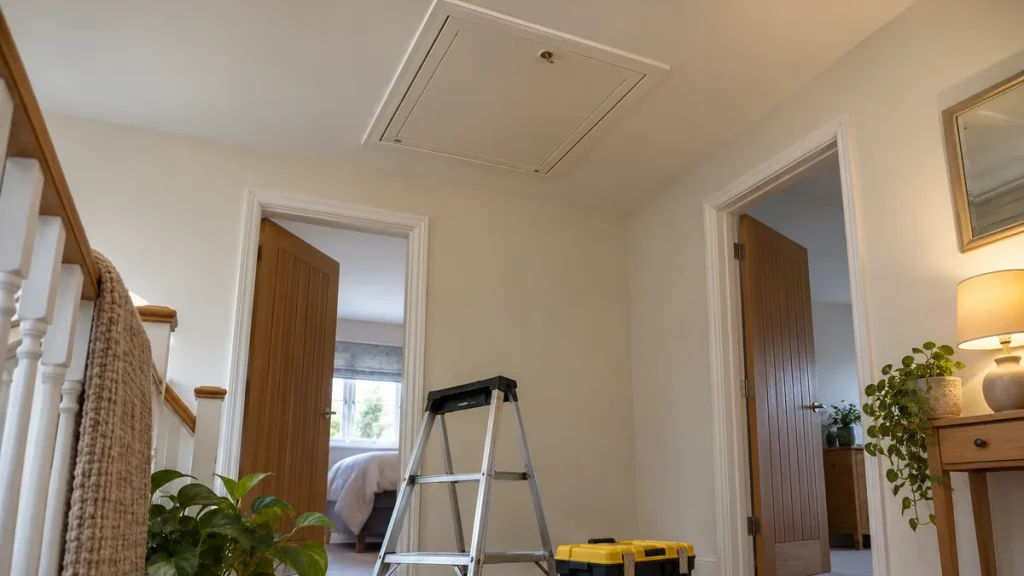
When noises or movement suggest an animal above the ceiling, it is natural to want to open the loft and look. A safer preparation is to collect a clear account, arrange access and leave suspect material undisturbed. Lofts can contain fragile boarding, cables, stored belongings and uncertain animal routes. The specialist can decide what can be inspected safely. You can make the appointment more useful without climbing into the void or moving insulation in advance.
Make a short timeline
Record when you first noticed the sound, the rooms below it and whether it occurs at similar times. Separate direct sightings from noises and reports from other people. A phone recording can illustrate the sound, but it does not establish the species. Note any visible roofline opening from safe ground level and photograph the wider roof as well as the detail. Do not use a ladder or lean out of a window to get a better angle.
Write down recent roof work, water leaks or changes to the space, but avoid assuming they caused the activity. A clear sequence helps the inspector decide where to look. If you have already attempted to block an opening or used a product, disclose exactly what was done and when. That information affects both safety and interpretation of the signs.
If the noise has stopped, keep the timeline rather than cancelling the concern automatically. Activity may vary, and a roof defect can remain even when the sound is absent on the appointment day. Tell the team about the change and ask whether inspection still makes sense. Conversely, if you see an animal entering the roof, note the exact point and time without approaching it. Direct observation can make the visit more focused, but it does not remove the need to check the interior route and any building damage.
Arrange the right access
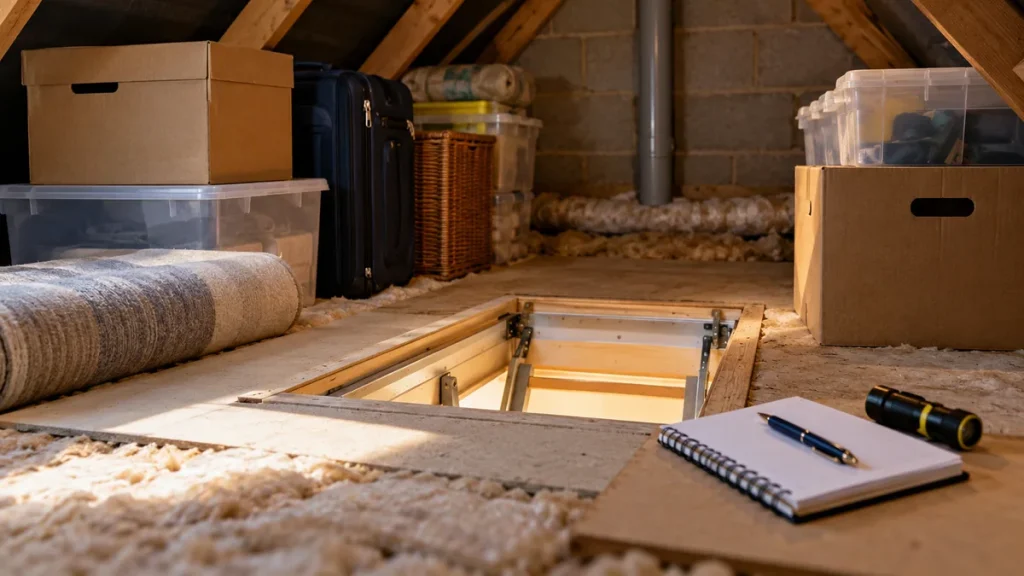
Locate the normal hatch and check who holds the key. If it is in a flat, ask whether the loft is private or communal and who can authorise entry. Tell the team about any lack of boarding, poor lighting or stored materials. Do not test the floor by walking into an unfamiliar space. If the hatch is over a stairwell or crowded room, explain that before the visit so the specialist can plan a safe approach.
Move light items from the room beneath the hatch only if you can do so safely and have permission. Leave space for the visitor to stand and assess access. Do not remove fixed panels, cut a new opening or shift belongings from the loft into living areas. Ask the team if they need any specific preparation. An instruction tied to the proposed inspection is better than a complete clear-out that may erase evidence.
If stored boxes block the hatch from below, photograph their position before moving them. Avoid opening suspect boxes simply to check for damage. If the belongings belong to another resident, ask the owner or managing agent to arrange access. The specialist may prefer to see an undisturbed area before anything is shifted. A realistic account of what is reachable can prevent a wasted visit and protect both the property and the person carrying out the inspection.
Preserve visible clues
Material near the hatch
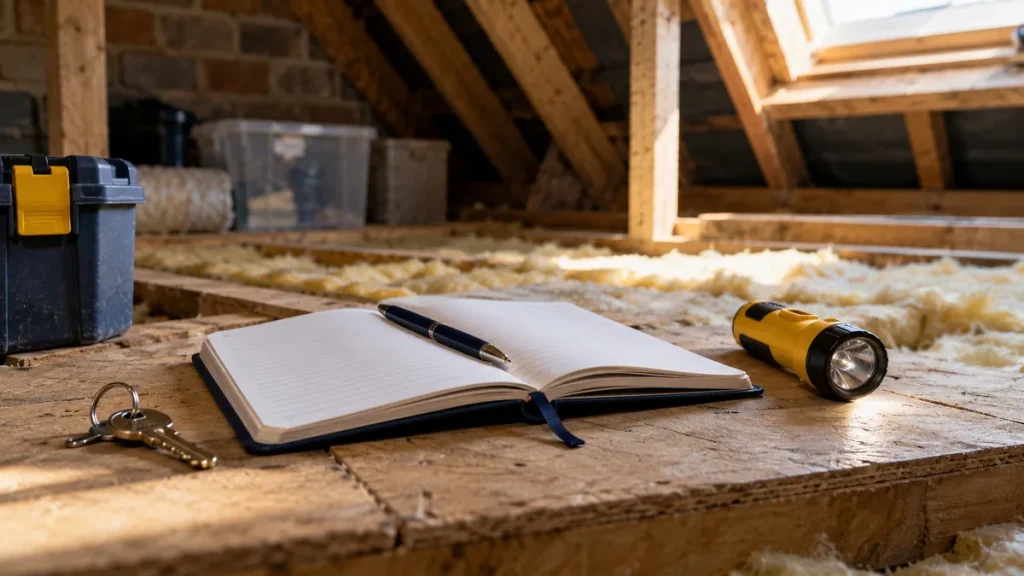
If you can see disturbed insulation, droppings or damaged storage from a safe position, photograph the scene without touching it. Do not brush or vacuum dry material. Follow current public health guidance if contamination in an occupied area must be cleaned, and tell the specialist what was removed. Avoid handling nesting material or an animal. A photograph with the hatch edge visible helps locate the sign later.
The roofline
Record visible gaps, loose soffits or damaged vents from the ground. A gap may be relevant, but it may not be used by an animal. Do not stuff it with material before the route is assessed. Blocking a possible entry while an animal is inside can create further problems. If the opening needs a roofer, the pest findings and repair timing should be coordinated.
Rooms below
Note staining, smells, ceiling damage or sounds separately. A leak or loose fitting can mimic an animal clue. If plaster is falling or an electrical fitting is wet, keep clear and contact the appropriate property professional. The pest inspector should know about these conditions, but building hazards need their own qualified response.
Explain who uses the property
Tell the team about children, pets, occupied rooms and any access restrictions. If a resident sleeps directly below the suspected area, mention it so the team can discuss practical precautions. If a managing agent controls the roof, arrange a contact who can authorise inspection and later repairs. Do not promise access to a neighbour's unit or communal space without permission. A limited visit can still help, provided its boundaries are recorded.
The site's squirrel control service describes checking evidence, likely species and accessible routes before a response is agreed. Preparation should support that sequence. It is not your task to choose a trap, chemical or proofing material before the inspector arrives. Ask instead what evidence would establish the source of the noise.
Questions for the visit
Which areas were inspected directly, and which remained inaccessible? What evidence supports a squirrel identification? Is a roof opening confirmed as a route or merely suspected? Does the plan require monitoring, control, proofing or a roofing repair? Who is responsible for each step, and what precautions apply before and after it? Clarify the quotation and whether a return visit is included.
If the evidence points to movement in a wall or kitchen rather than the roof, describe it separately. A different assessment, such as the mice control service, may be appropriate. Avoid combining every sound in the building into one diagnosis. A specialist can compare the locations and explain what remains uncertain.
After the inspection
Keep the written findings and follow any instructions about access, cleaning or monitoring. Record new sounds or visible signs with dates. If a repair is assigned to a roofer or manager, track when it is completed. A quiet night does not prove that the route is closed, and an old gap can remain visible after activity ends. The follow-up should compare evidence before and after the agreed work.
Share the findings with the person responsible for building repairs. Ask for a description of the opening and the reason it matters. If the repair cannot happen immediately, confirm what precautions and monitoring the specialist recommends. Do not improvise a seal or move equipment while waiting. Keeping the sequence documented helps everyone understand which actions are complete and which still depend on roof access.
For the stated Wembley area, the site's contact page provides current details. Give your full postcode, property type, hatch access and short timeline when arranging the visit. Leaving the loft undisturbed while preparing safe access gives the specialist a better chance to interpret the signs accurately.