
How mice enter a Wembley flat
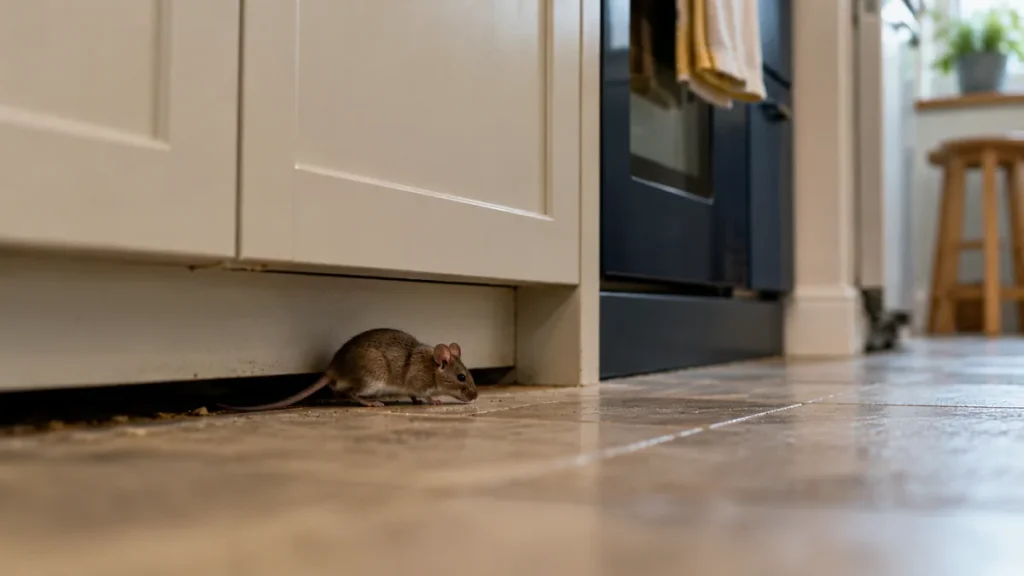
A mouse in a flat does not need an open front door. Small gaps around services, an unsealed cupboard back or a shared void can provide a route between spaces. The entry point you can see may not be the one being used. Understanding the building layout helps you explain the problem to a pest controller and the managing agent without pulling the flat apart. It also prevents a quick patch from concealing activity before the route is assessed.
Start with the building, not a hole
Think about where the first signs appeared: near food, beside a pipe run or at an external wall. Make a simple sketch of the affected room and mark droppings, gnaw marks or sightings. Note what sits on the other side of each wall if you know. A kitchen wall might border a bathroom, corridor or service riser. This context matters because a mouse can travel behind a fitted unit while leaving its clearest evidence some distance away.
Do not infer the route from one sign. A dropping in a cupboard shows that the area should be checked, but not which gap was used. Photograph the cupboard and any accessible opening. Avoid reaching into a void, lifting floorboards or shifting heavy appliances. The goal is a useful map of evidence, not a home investigation that damages the property or disturbs wiring and plumbing.
Common routes to examine safely
Service penetrations
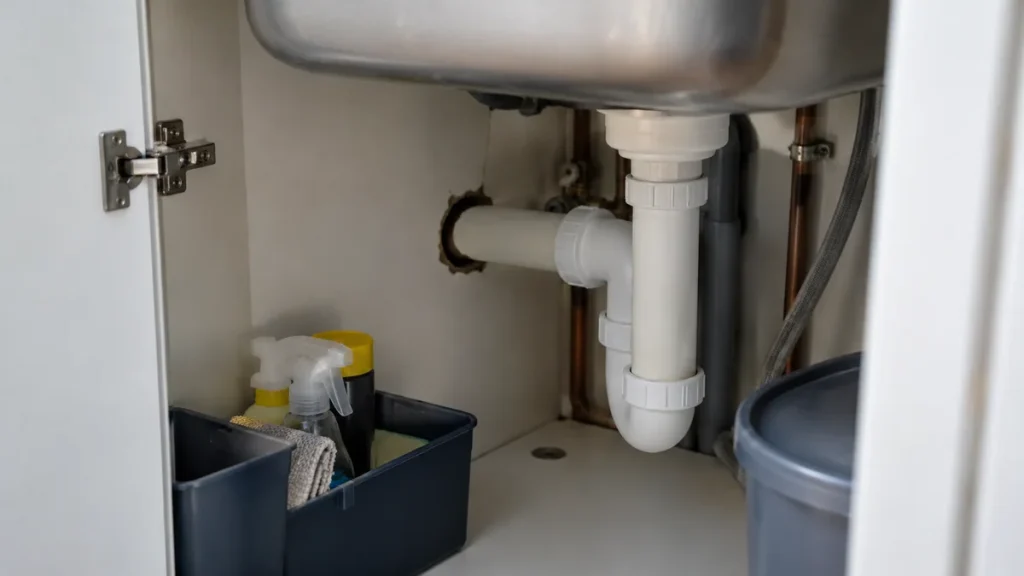
Pipes and cables pass through walls, floors and cupboard backs. If the opening around one is larger than the service itself, it may merit inspection. Look under the sink and around exposed pipework from a comfortable position. A torch can reveal the edge of an opening without putting your hand inside it. In a block, the space behind that opening may connect to a shared shaft, so the responsible person may need to arrange access beyond the flat.
Edges behind fitted units
Kitchen plinths and fitted cupboards can hide gaps at the floor or wall. Signs along a skirting edge may lead towards them, but removing panels can disturb evidence or cause damage. Record what is visible, including any torn packaging or disturbed dust. If a panel is already loose, tell the inspector. Do not dismantle the kitchen simply to prove a suspected route.
Doors, windows and external fabric
Check accessible thresholds and frames for gaps that could allow movement. An external wall with a visible opening should be photographed from safe ground level. Do not climb outside a flat or lean from a window to inspect brickwork. The managing agent or owner may have to arrange building repairs. A pest assessment can identify proofing priorities, but repair responsibility and access should be agreed separately.
Why shared voids complicate a flat
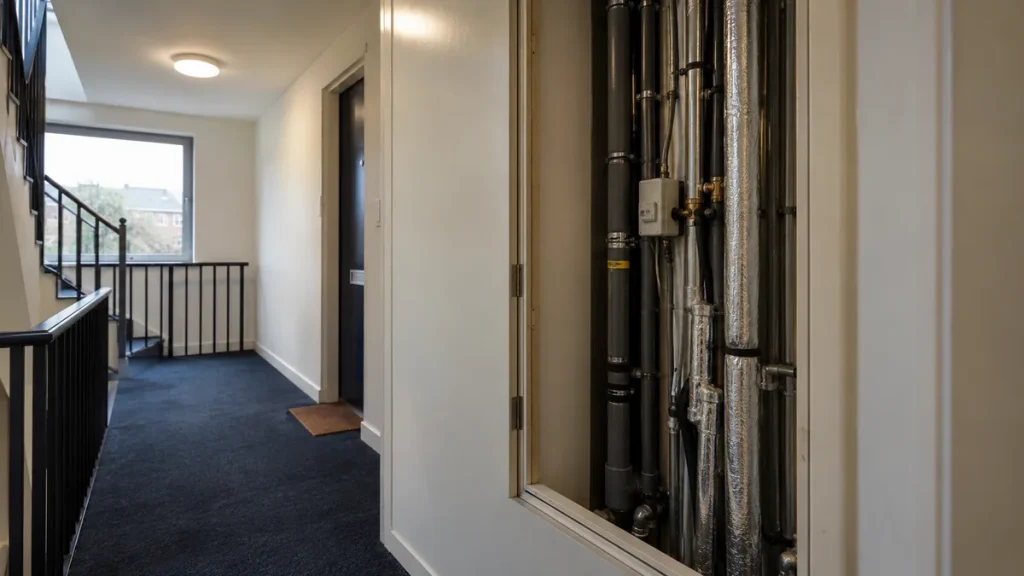
Flats often have continuous spaces for services. A route can cross the boundary between private and communal areas even when the visible signs are confined to one kitchen. That means treating only the room with the clearest evidence may leave the cause unresolved. Ask whether similar signs have been reported elsewhere, but avoid drawing conclusions about a neighbour's home. Give a managing agent a factual report with dates, locations and photographs rather than a claim about where the mouse originated.
If you rent, confirm who can authorise inspection and repairs. A pest controller may be able to assess your flat yet still need access to a riser, bin area or adjoining space to understand a recurring problem. Keep the chain of communication clear. Record whom you contacted and when access was offered, so a delay in building work is not mistaken for failure of treatment.
Conditions that make a route attractive
Food, water and shelter can sustain mouse activity once an entry route exists. Keep dry food in closed containers, clear accessible crumbs and manage waste. Look for a leaking pipe or water trapped under a unit and report it for repair. These steps are useful housekeeping, but they do not seal a route or identify an animal. A spotless kitchen can still have a gap connected to a shared void.
Avoid pushing cloth, foam or another makeshift material into an opening you have not assessed. It may be unsuitable for the location, hide continuing movement or interfere with services. Sealing a gap while an animal remains in a concealed space can create another problem. The site's mice control page describes checking accessible evidence and routes before agreeing treatment and proofing priorities. That order matters more than a fast cosmetic fix.
Keep a route report proportionate
You may find several gaps in an older flat. List them without labelling each one an entry point. Some openings are inaccessible from the other side; others may lead nowhere useful to a mouse. A specialist can compare them with signs of movement and decide which deserve attention. This distinction also helps when discussing repairs with an owner or agent. Ask for the specific location and reason behind each proposed repair, then confirm whether the repair is part of the pest work or a separate building task. If access is delayed, continue recording new evidence rather than repeatedly opening the same cupboard.
A practical inspection record
Note the room, height and approximate position of each visible opening. Add the date of each new sign and whether the area had already been cleaned. If you see packaging damage, record the item and shelf. Mention noises, but distinguish them from direct sightings. A short timeline can show whether activity is continuing, concentrated in one place or appearing across several rooms.
Take photographs with enough surrounding context to locate the opening later. A close view without a wider shot can be difficult to interpret. Do not place a hand or ruler beside a suspect sign if doing so would bring you near contamination. Tell the inspector about children, pets, access restrictions and products already used. Those facts affect how a visit can be carried out safely.
What happens after a route is found
The response depends on the evidence and the structure. An inspector may recommend monitoring, suitable control measures and specific proofing work. Ask which openings are confirmed, which are only suspected and who will carry out repairs. In a flat, a plan may require cooperation from the owner or managing agent. Follow the aftercare instructions you receive and keep notes of genuinely new signs. A gap that looks neat after a repair is not, by itself, proof that activity has stopped.
Repeated droppings, fresh damage or sightings after cleaning justify professional assessment. If the signs appear around shared bins or external areas, describe those too; a different service, such as rat control, may be considered if the evidence points that way. For the stated Wembley area, use the site's contact page to give your postcode, building type and access details. An accurate description helps the team plan an inspection without assuming that a visible hole tells the whole story.