
Burrows near a building: when rats may be involved
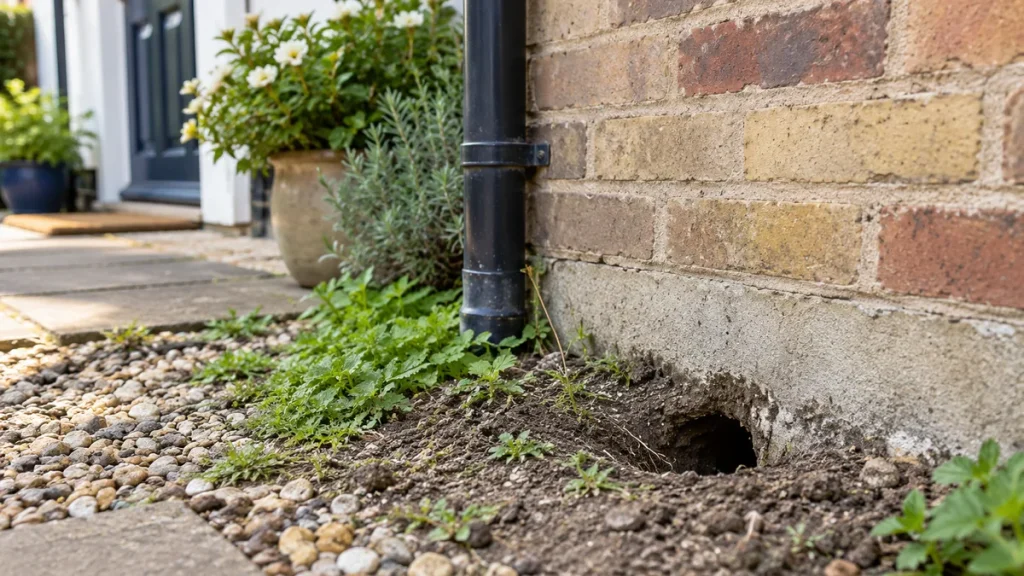
A hole beside paving or a wall can draw attention quickly, particularly if rubbish nearby has been disturbed. It may be a burrow, a gap left by ground movement or an opening used by a different animal. Its position and surrounding evidence matter more than its appearance alone. Do not test the hole by putting a hand inside, flooding it or blocking it. A careful record allows a specialist to assess whether rats may be involved and whether the building itself needs attention.
Observe from a safe distance
Stand where you can see the opening without stepping on loose ground. Photograph the area as a whole, then take a closer image if it is safe. Note the date and exact location, such as “beside the rear bin store wall”, rather than just “in the garden”. If you can estimate the opening's size without touching it, record that as an approximation. Avoid leaning a ruler into the hole or disturbing soil for a better picture.
Look for other signs nearby: repeated paths along a wall, droppings, disturbed waste, gnaw marks or fresh soil. None is conclusive in isolation. Rain, gardening and building work can change the ground rapidly, so note recent weather or maintenance. If the opening is in a communal area, tell the person responsible for the site and avoid entering locked or unsafe spaces yourself.
Be careful with second-hand accounts. A neighbour may have seen movement at a different place or time, and a contractor may have uncovered an old opening during repairs. Ask for the location and date rather than combining all reports into one supposed route. The exact sequence can matter. A hole noticed after paving work and a hole that has changed over several quiet weeks may call for different questions. Keep your record simple enough that another person can check it without guessing what you meant.
Why location changes the concern
Close to doors or services
An opening at a threshold, around a pipe or beside a damaged wall raises a question about access to the building. Photograph accessible surfaces, but do not remove covers or put fingers into service gaps. A structural repair may be needed separately from pest control. If you notice exposed wiring, a leak or unstable paving, keep clear and report that hazard to the appropriate property professional.
Around bins and stored materials
Food waste and shelter can make a place attractive to a range of animals. Check whether bin lids close, bags are contained and spilled food is cleaned up. A hole near waste does not automatically identify a rat nest. It may be an entry to another space, or it may be unrelated. Keep the observation factual: where is the hole, when did you notice it and have other signs appeared?
Beside planting or a boundary
Dense ground cover can hide openings and routes along fences. Do not strip a whole planted area to investigate. Note where it is and whether access for inspection would require the owner, neighbour or managing agent. An inspector may need a wider view of the surroundings before proposing any proofing or control. A boundary opening can affect more than one property, so permissions should be clear before work begins.
Do not confuse appearance with activity
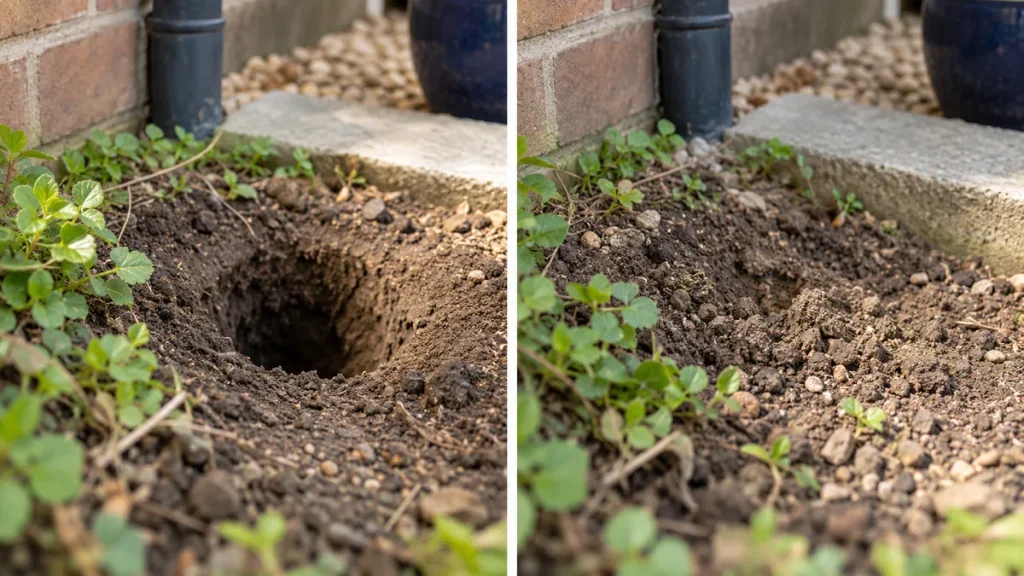
Loose soil can make a hole look fresh, but rain, pets and maintenance can shift it. A clean edge may reflect erosion rather than current use. Conversely, an active route may leave little obvious material where people walk frequently. A dated photograph followed by another taken later from the same position can help show change. Do not alter the opening to create a test. You can record visible change without interfering with the ground.
If you see an animal entering or leaving, remain at a distance and note the time. A clear photograph may help, but safety comes first. Avoid trying to trap or corner it. The site's rat control service describes checking evidence and access routes before choosing a response. That is especially important when the opening is close to a building, where careless sealing might redirect movement or conceal a structural issue.
What an assessment should establish
Ask whether the opening appears to be used, what evidence supports the species identification and whether more than one route is involved. Where could the route lead? Is the building fabric damaged, and who is responsible for repair? If the opening cannot be assessed safely, what access or specialist trade is needed? A good plan distinguishes pest control from drainage, electrical or structural work. It should also explain any precautions for children, pets and people using a shared area.
The answer may be monitoring rather than immediate treatment if evidence is uncertain. A specialist may inspect surrounding waste arrangements, wall edges and accessible indoor areas before proposing control. Do not ask for a product solely because a hole exists. The relevant decision is whether there is current animal activity and what conditions allow it to continue.
Clarify repair responsibility
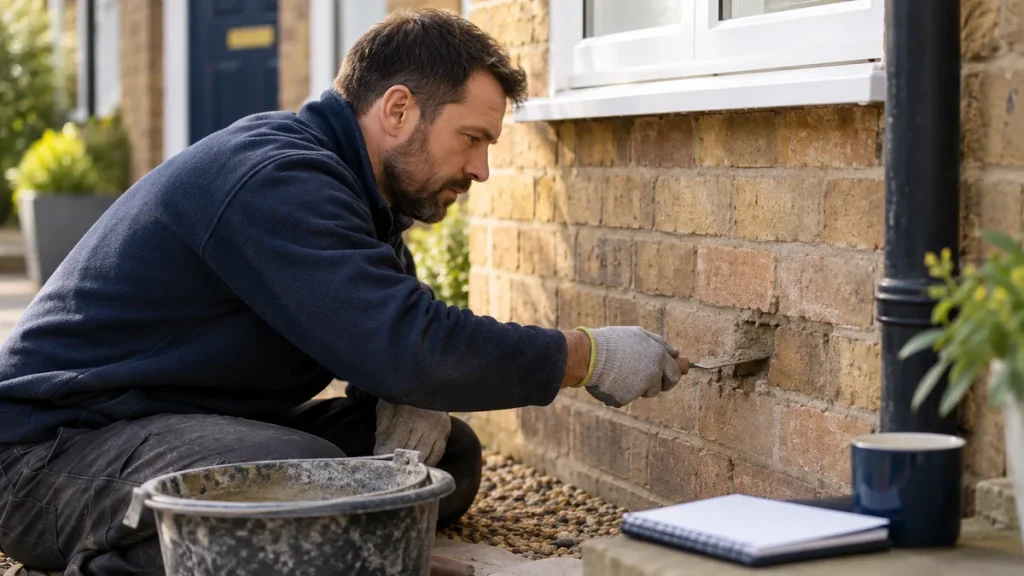
An opening in private paving, a boundary wall or a communal bin store may involve different owners. Ask who can approve excavation, proofing or a contractor's visit before the appointment if possible. A pest controller can identify a likely route, but permission to alter the building is a separate matter. Keep any written findings so they can be passed accurately to the person arranging repairs. If a drainage defect is suspected, ask which specialist should investigate it and whether that work must happen before the pest plan can be completed safely for everyone.
Sensible steps while waiting
Keep waste contained, close bin lids and clean accessible food spills. Do not place loose bait around the opening or use improvised chemicals. Keep pets and children away from the specific area. If paving looks unstable, report it and prevent access according to the property's normal safety arrangements. Record new signs with dates rather than repeatedly probing the hole. If the area is shared, send the managing agent a concise report and ask them to preserve access for the inspection.
If there are signs indoors, note them separately. Droppings in a kitchen or sounds in a wall may or may not connect with the outdoor opening. The inspector can compare the evidence. If the likely species remains unclear, the mice control service may also be relevant to the discussion. Do not classify the problem from the size of one dropping or opening alone.
When to seek help
Repeated sightings, an opening that changes alongside fresh waste disturbance, or signs close to food storage warrant a prompt conversation. Mention a commercial setting or shared bin store if one is involved. For the stated Wembley area, the site's contact page provides the current details. Give your full postcode, safe photographs and the dates of observations. A measured description helps the team decide what access is needed and which part of the site to inspect first.