
How to inspect bed seams and nearby furniture safely
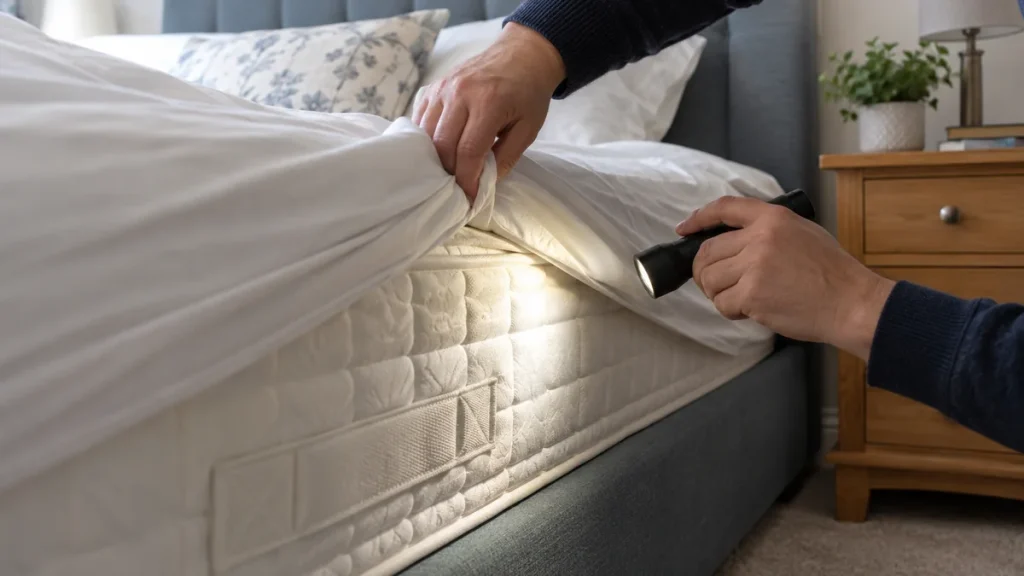
If you have found a suspect insect near the bed, a careful look at accessible seams and furniture can provide useful evidence before a professional visit. The aim is to record what is visible, not to dismantle the bedroom or spread items through the home. A single stain or skin mark cannot confirm bed bugs. Good lighting, a simple sequence and a few clear photographs are more useful than an exhaustive search that disturbs every possible hiding place.
Prepare the room for a limited check
Choose a time when you can work calmly with adequate light. Keep children and pets away from suspect items. Have a phone or camera ready to record locations. Do not move bedding to another room to make space. If you need to set a sheet aside, keep it within the same room and note where it came from. Avoid placing bags or clothing on the bed during the check.
If you have already used a spray or another product, stop and follow its label precautions. Do not mix treatments or apply more simply to make insects appear. Tell the specialist what was used, where and when. An inspection should not expose you to unnecessary chemicals or make later identification harder.
Before touching the bed, note where you first noticed the concern. Was it an insect on a sheet, a mark on the frame or a skin reaction without physical evidence? These starting points should not be treated as equal. If someone else found an insect, ask whether they kept a photograph and the date. Avoid reconstructing a sighting from memory as though it were confirmed. The inspection is more useful when it separates directly observed signs from worries about what might be hidden.
Follow a consistent route around the bed
Mattress edges
Look along accessible seams and piping, especially near the head of the bed. Lift the edge only as far as you can safely manage. Do not tear the cover, unzip an enclosed mattress without advice or drag the mattress through the home. Photograph a suspect insect or mark in place, then take a wider picture showing the part of the bed. A close crop alone can make scale and location hard to judge.
Bed frame and headboard
Check visible joints, edges and the area where the frame meets the wall. Use a torch rather than a sharp tool to probe narrow gaps. Do not dismantle a heavy frame or pull a fixed headboard from the wall. If an area cannot be seen, note that limitation. A professional can decide whether and how it should be accessed during a planned inspection.
Nearby furniture
Look at the accessible edges of bedside tables and the skirting behind the bed without moving heavy items alone. Do not empty every drawer onto the floor. Record any insect or staining with the date and exact location. Evidence in another piece of furniture may affect the inspection scope, but one dark spot does not prove what caused it. Keep items in their original room until the team gives preparation instructions.
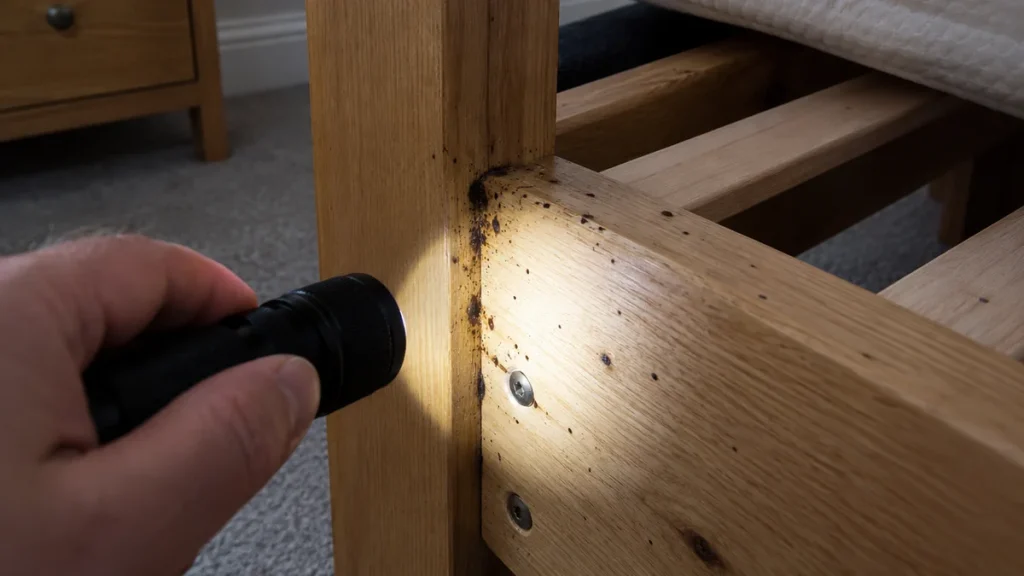
What to photograph
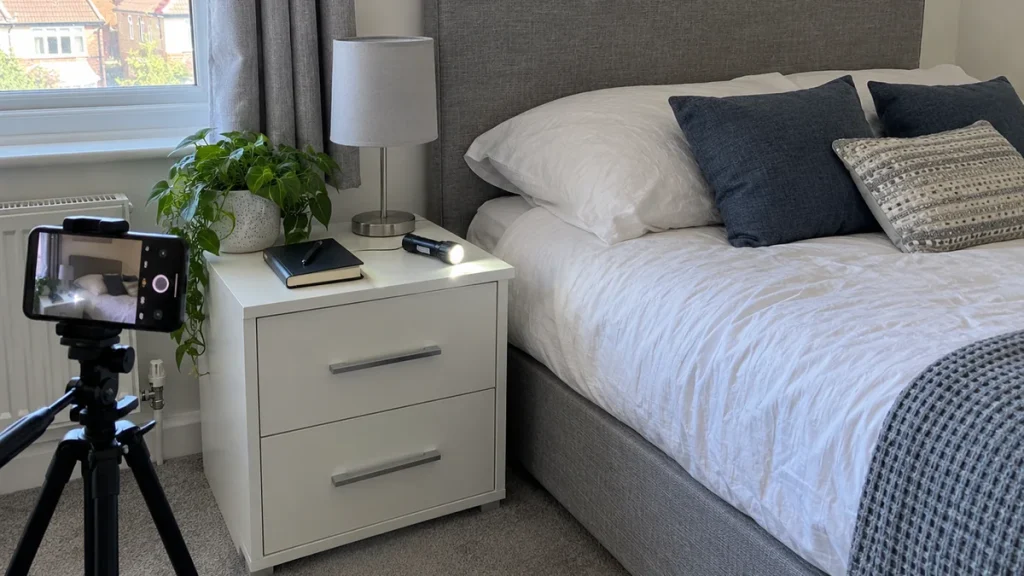
Take one wider image of the bed or furniture, one closer view of the sign and, if possible, another that shows its scale without touching it. Do not place a finger beside suspect material. Keep the original files and dates. If the image is blurred, say so rather than enlarging it until it appears conclusive. A clear insect photograph may help identification, but the specialist will consider the wider pattern and physical setting.
Do not rely on photos of skin marks as the primary evidence. A bite-like reaction can have several causes and cannot identify a pest. If you have a medical concern, seek appropriate healthcare advice. The site's bed bug treatment service describes checking seams, joints and insects before agreeing a treatment plan.
Check the photograph before leaving the spot
Make sure the sign is in focus and the wider image shows which seam or joint you mean. If unclear, try once more; do not repeatedly handle the fabric to stage a scene. Use the phone's camera rather than filters that alter colour or sharpen edges. Save the image with its date. When you speak to the team, explain if an item was cleaned or moved after the photograph. That context is more useful than an edited close-up that appears precise but lacks location.
Avoid spreading suspect items
Do not carry bedding, luggage or cushions into another bedroom for comparison. If an item must be moved for normal use, keep it contained and ask the specialist how to handle it. Do not discard the bed or sofa on the basis of one uncertain mark. That can be costly and may move suspect material through shared spaces. A professional can advise what preparation or handling fits the confirmed problem and the proposed method.
If you share a flat, tell the responsible person about factual signs without blaming another occupant. Ask whether other rooms need assessment only after the evidence is reviewed. The route by which an insect arrived cannot usually be inferred from the first place it was noticed. Keep messages concise and avoid circulating private details that do not help arrange an inspection.
If the bed is in a multi-use room, note where people sleep and where bedding is stored. Do not make a sudden change to sleeping arrangements simply to avoid the suspected area without asking for advice, as moving belongings can complicate the investigation. A specialist can explain how to manage the room while identification is pending. If a child or vulnerable person uses the space, mention that when booking so appropriate precautions can be discussed before any treatment decision.
Know when to stop checking
If you find a live suspect insect, photograph it safely and note the location. You do not need to search every seam that day. If no physical sign appears, record which areas were checked and leave the room in normal use. Repeatedly dismantling furniture can disturb the setting and create anxiety without adding reliable evidence. A professional may recommend targeted monitoring or another visit if the concern continues.
Ask the team what to leave in place before they arrive. The bed bug heat treatment service is a separate method that needs assessment and preparation; it should not be selected from a quick home check. If treatment is proposed, clarify what evidence supports it, what preparation is required and how follow-up will be judged.
Arrange a useful assessment
Give the team your full postcode, the room involved and a short timeline. Mention any clear insect photographs, other signs, previous products, pets and access constraints. Ask what the inspector will check and whether furniture should remain in place. For the stated Wembley area, use the site's contact page for current details. A limited, careful inspection of accessible seams can help the conversation while preserving the evidence needed for a proper diagnosis.