
Bed bug signs beyond bites
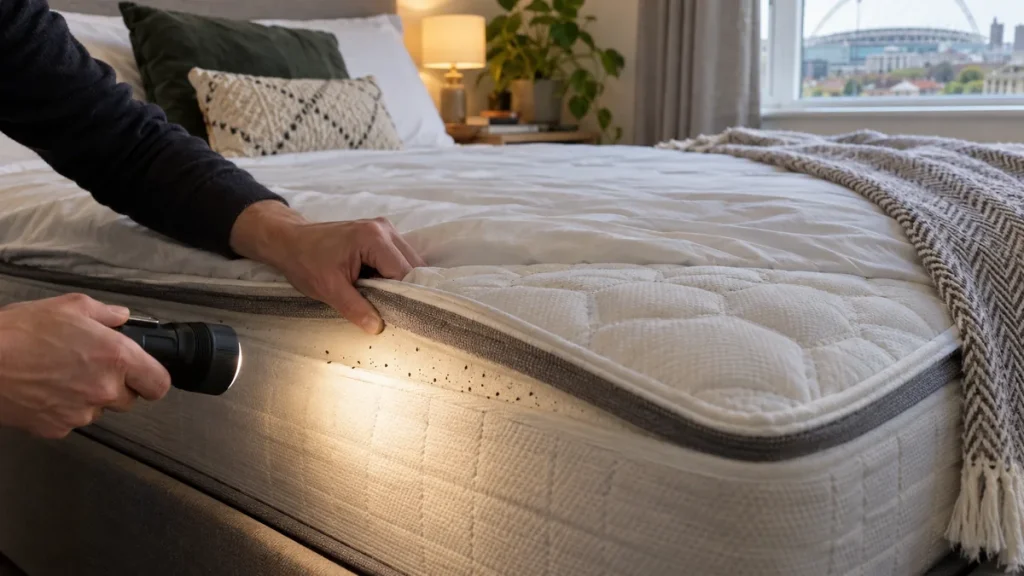
An itchy mark after sleep can be worrying, but skin reactions alone cannot identify bed bugs. Many causes can produce similar marks, and some people may notice no reaction at all. A better first check looks for insects or other evidence around sleeping areas while avoiding actions that could move suspect items through the home. Record what you find, keep the area contained and seek an assessment if the signs persist. This guide focuses on visible evidence rather than diagnosing a skin condition.
Start with the bed and nearby furniture
Use good lighting and inspect accessible mattress seams, the bed frame and the immediate area around the headboard. Look without tearing fabric or dismantling the bed. Photograph anything suspect in place, including a wider view that shows where it was found. A dark speck or stain is not conclusive on its own. Clear images of an insect, its shape and location may be more useful to a specialist than a photograph of a bite.
Check bedside furniture and the edge of the skirting where it is easy to see. Bed bugs can hide in small spaces, but that does not mean every crack should be opened by hand. Avoid putting fingers into concealed joints or moving heavy furniture alone. If you find a suspect insect, do not crush it onto a surface or carry it loose through the property. Ask the pest team how they prefer evidence to be recorded or contained.
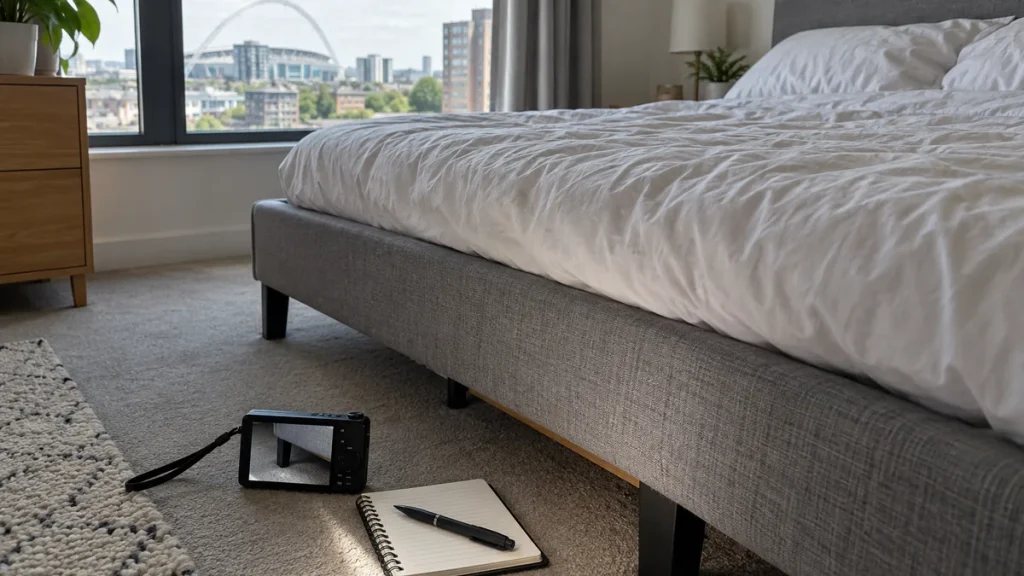
Look at one area at a time and keep a note of what you have already checked. A rapid search through every drawer can scatter items and make a later inspection less clear. If luggage or stored bedding sits close to the bed, record its location without moving it through the home. This is useful if several rooms are occupied. Ask the team whether they want those items left where they are or prepared in a specific way. Follow their answer rather than adopting an online checklist that may not fit the chosen treatment.
Types of evidence to note
Insects and shed skins
A live insect or shed skin near a sleeping area can help an inspector identify the source. A close photograph may still be ambiguous, so include the surrounding location. Do not assume every small brown insect is a bed bug; carpet beetles and other household insects may be found indoors. If identification is uncertain, a professional can compare the specimen with other signs. Record the date and room before cleaning or moving anything.
Spots and staining
Dark spots on seams or bed frames may deserve inspection, but a stain alone does not establish what made it. Mark the exact location on a photograph and note whether it is new. Do not scrub all suspect areas before the assessment if you can safely leave them undisturbed. If bedding must be changed for normal use, record what was moved and keep items from the affected room separate until you have advice.
A pattern across the room
Several signs in related places are more useful than one isolated mark. Note whether evidence is confined to the bed, extends to a bedside table or appears in another room. Do not transfer cushions, bedding or luggage between rooms to compare them. The site's bed bug treatment service describes checking seams, joints and identifiable insects before selecting treatment. That evidence-led step helps avoid treating the wrong pest.
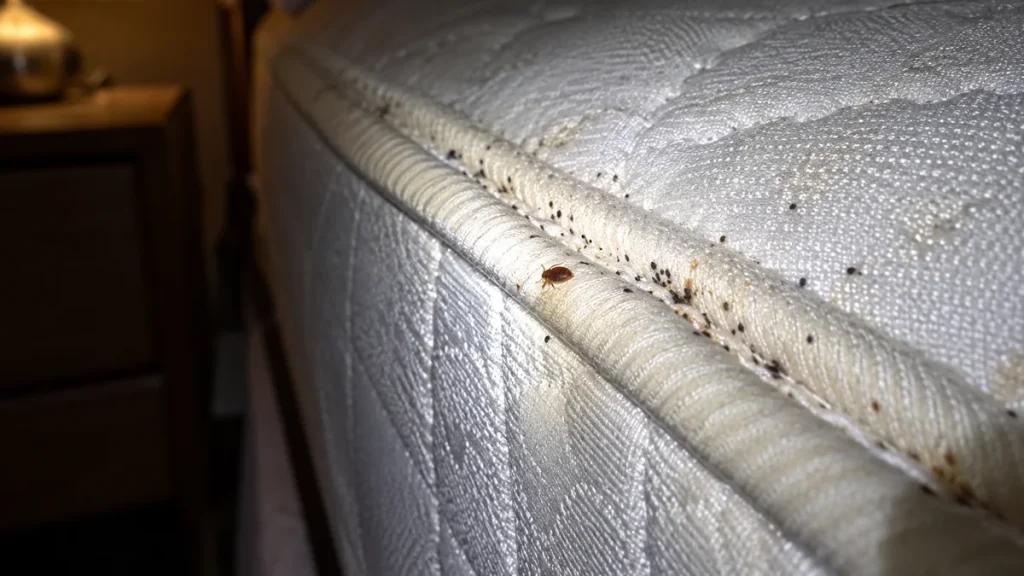
Why bites are a poor test
A skin mark cannot show which insect, if any, caused it. Timing is also uncertain; a reaction may not match the night you noticed the mark. Avoid trying to diagnose the problem by comparing photographs of bites online. If you have a medical concern, speak to an appropriate healthcare professional. Pest inspection addresses the room and any identifiable insects, not the cause of a person's symptoms.
Keep a record of the marks if it helps explain your concern, but prioritise photographs of physical evidence in the room. Do not let the absence of bites rule out a problem if an insect has been found. Equally, do not discard furniture or apply chemicals because several people have itchy skin. The right response depends on identification and the condition of the property.
Be careful with online identification
Search images often show a single insect enlarged against a clean background. In a bedroom, the view may be brief, poorly lit or partly hidden. Colour can change under a phone flash, and a tiny insect can look larger in a cropped image. If a photograph is uncertain, say so. Keep the image and a wider shot so the specialist can judge scale and setting. Avoid telling other occupants that an identification is certain before it has been checked; that can prompt unnecessary disposal of belongings or unplanned chemical use.
Avoid spreading suspect material
Do not move bedding, cushions or luggage into another bedroom without advice. If an item must be handled, keep it contained and ask the specialist for preparation instructions. Vacuuming or laundering may form part of a plan, but the timing and handling matter. Avoid spraying several products or mixing treatments; this can create risks and interfere with inspection. A targeted approach follows the evidence and the method chosen for the room.
If you live in a flat or share accommodation, report the concern factually to the responsible person. Do not assume the source was another resident or visitor. Access to adjoining rooms may be relevant only if the specialist's findings support it. Keep private details about other occupants out of general messages. The aim is to organise inspection, not to assign blame.
What to tell the specialist
Describe the first sign, where each observation was made and whether the room has been cleaned or treated since. Mention recent travel or second-hand items if relevant, without treating them as proof of the source. Tell the team about children, pets, room use and any previous products. Ask what to leave in place before the visit and what preparation is needed. The bed bug heat treatment service may be discussed after assessment; it should not be selected from bite marks alone.
At the inspection, ask what confirms the identification, which areas were checked and what remains uncertain. If treatment is proposed, clarify the method, preparation, aftercare and whether follow-up is included. Do not promise yourself that one visit will settle every concern; judge progress by the agreed evidence and review plan.
If no bed bug evidence is found, ask what was inspected and whether monitoring is sensible. Keep notes of new insect sightings without repeatedly dismantling the room. Seek healthcare advice separately for skin concerns.
For the stated Wembley area, use the site's contact page to share your postcode and the room where signs were found. Clear photographs of an insect or location, if safely obtained, can make the conversation more useful. Keep suspect items in place until you have specific advice.